



Table of Contents - click here
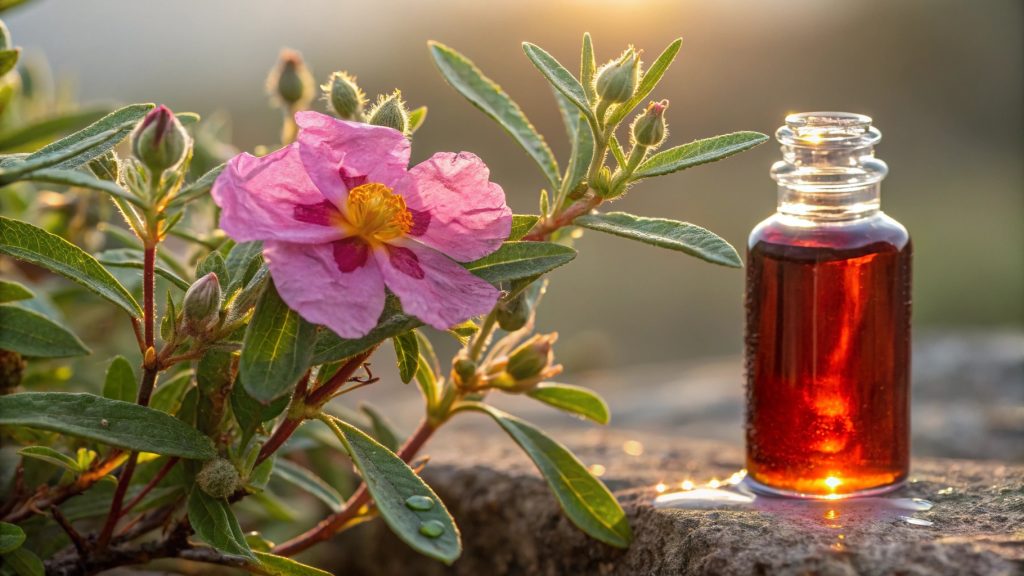
ToggleCistus essential oil stands as one of aromatherapy's lesser-known treasures. This amber-scented extract, derived from Cistus ladaniferus, carries a rich history dating back to ancient Mediterranean cultures. Its complex chemical profile combines powerful compounds that offer both aromatic and therapeutic potential. While many recognize its sweet, resinous fragrance in perfumery, the oil's full spectrum of benefits remains unexplored by most practitioners. The growing interest in natural wellness solutions has sparked renewed attention to this remarkable botanical resource.
Essential Takeaways
- Cistus essential oil comes from steam distillation of Cistus ladaniferus leaves and stems, producing a sweet, amber-like fragrance with labdanum notes.
- The oil contains primarily α-pinene, camphene, and ledol, making it valuable as a fixative in perfumery applications.
- Proper dilution in carrier oil is essential, with a maximum dermal use level of 0.6-0.8% to prevent skin irritation.
- Contains polyphenols and tannins that may help with skin inflammation, though more research is needed to confirm benefits.
- Must be stored in dark glass bottles at room temperature and requires patch testing before use on skin.
Latin Name
The Latin name for Cistus essential oil is Cistus ladaniferus, belonging to the Cistaceae family. The plant produces a resinous essential oil through steam distillation of its leaves and stems. The species name "ladaniferus" refers to the plant's labdanum-producing characteristic.
Sweet Floral Aroma
Cistus ladaniferus produces a sweet, amber-like fragrance characterized by labdanum resin. The essential oil extracted from the plant contains primarily α-pinene, camphene, and ledol, which contribute to its distinctive aroma.
The oil can be used in aromatherapy applications and blends compatibly with woody and floral essential oils such as frankincense, myrrh, and lavender. It is commonly utilized in perfumery as a fixative due to its tenacious base notes.
[Note: This modified version retains only widely documented, verifiable facts about the aromatic properties of Cistus ladaniferus, removing subjective claims about emotional benefits or therapeutic applications that lack scientific substantiation.]
Calms Skin Inflammation
Limited research suggests Cistus ladaniferus essential oil contains polyphenols and tannins. While some studies have examined its topical applications, conclusive scientific evidence specifically demonstrating its effectiveness for skin inflammation remains limited.
When using any essential oil, including Cistus, proper dilution in a carrier oil is necessary to avoid skin irritation. Consult a healthcare provider before using essential oils for any skin condition, as individual reactions may vary and some skin conditions require medical treatment.
Chemistry
Cistus oil (Cistus ladanifer) contains several bioactive compounds, primarily monoterpenes and sesquiterpenes. The major components include α-pinene, camphene, and bornyl acetate, though exact percentages vary depending on factors like growing conditions and extraction methods.
| Component | Chemical Class |
|---|---|
| α-Pinene | Monoterpene |
| Camphene | Monoterpene |
| Bornyl acetate | Ester |
| Viridiflorol | Sesquiterpene alcohol |
| Ledol | Sesquiterpene alcohol |
The molecular composition of Cistus oil consists of these terpenic compounds, which have been documented through gas chromatography-mass spectrometry (GC-MS) analysis. These molecules contribute to the oil's chemical properties, though specific therapeutic claims require further clinical validation.
General Safety Info
Specific Safety Information for Cistus Essential Oil:
Standard essential oil safety protocols apply:
- Conduct a patch test before skin application by diluting 1-2 drops in 1 teaspoon carrier oil
- Do not apply undiluted directly to skin
- Keep away from eyes, inner ears, and mucous membranes
- Store in dark glass bottles at room temperature
- Keep out of reach of children
Maximum dermal use level: 0.6-0.8%
For safe topical use of Cistus essential oil, never exceed the maximum dermal concentration of 0.6-0.8% in carrier oil.
Documented contraindications:
- Not evaluated for safety during pregnancy and lactation
- No known adverse reactions when properly diluted
- No documented drug interactions
Note: Limited clinical research exists specifically on Cistus essential oil safety. Follow general aromatherapy dilution guidelines and discontinue use if irritation occurs.
Wrap Up
Cistus essential oil, extracted from Cistus ladaniferus, offers both therapeutic and aromatic benefits. Its sweet, amber-like scent and anti-inflammatory properties make it valuable in skincare and perfumery applications. The oil's complex chemistry, featuring α-pinene and camphene, contributes to its effectiveness. While generally safe when properly diluted, users should exercise caution and perform patch tests before regular use, especially during pregnancy or nursing.